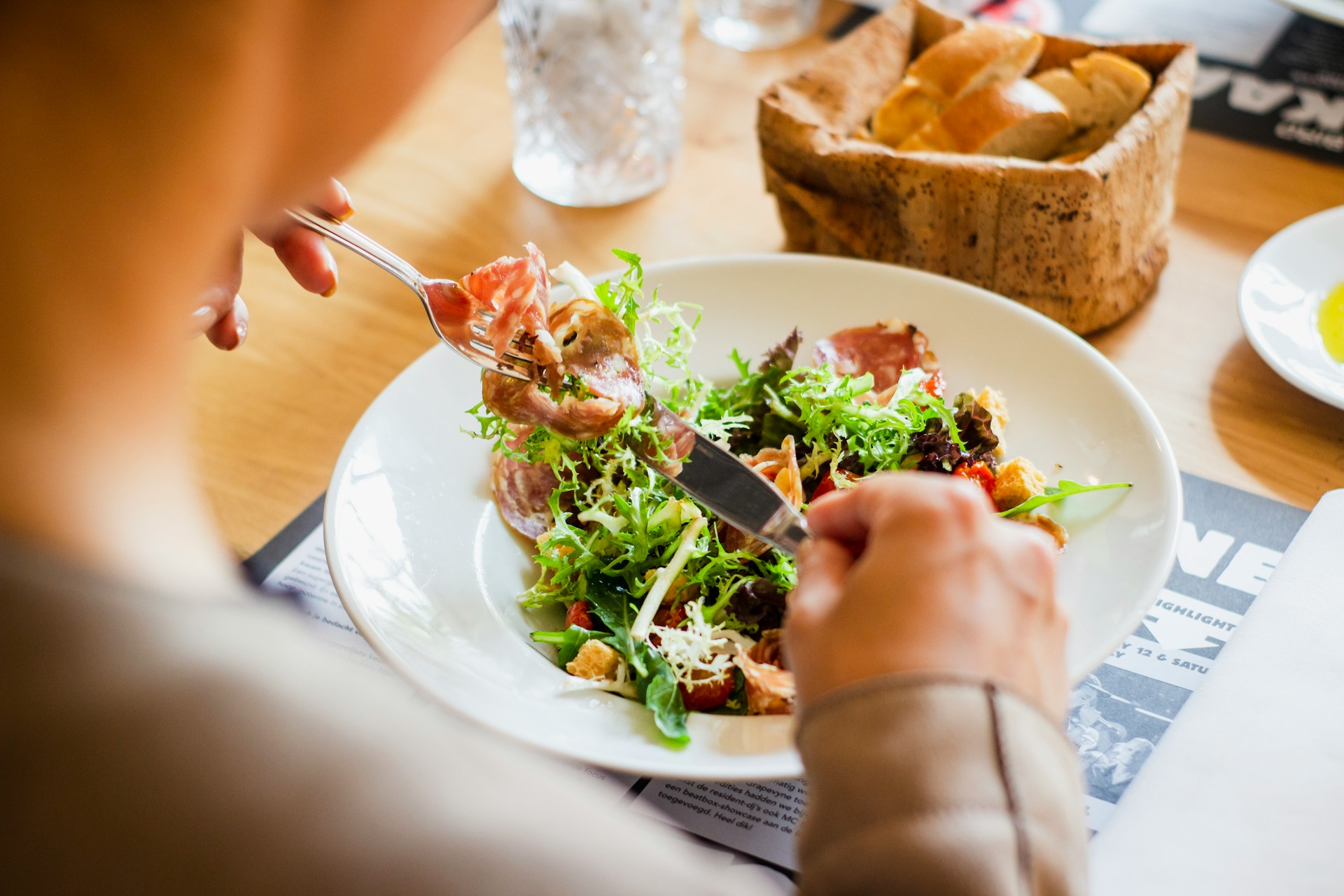
What Mindful Eating Means
Mindful eating is not a diet structure. It shows up when attention moves back to the plate instead of the phone, laptop, or traffic noise outside the window. People often notice they eat faster than they think — sometimes finishing a meal in 7 minutes without remembering the taste.
The shift starts with tempo. A normal meal takes 15–20 minutes for satiety signals to register in the brain. Eat faster and the signal arrives late. That delay leads to extra bites that feel automatic instead of chosen.
Slow eating sounds simple. It rarely is.
Most habits around food run on autopilot. You open a snack without deciding. You finish what’s left without checking hunger. Then you wonder why the portion disappeared so quickly...
In practice, mindful eating sits between awareness and interruption. Not control. Not restriction. Just noticing what happens in real time.
Some people use apps like Headspace or Calm for guided eating meditations. Others set a single rule: no screens during meals. That rule alone changes intake patterns within 3–5 days for many users.
Where It Breaks Down
People assume mindful eating fails because of willpower. That explanation sounds clean. It is wrong.
In reality, the environment pulls attention away faster than intention can hold it. Notifications, shared meals, work deadlines, and delivery apps reshape eating into background activity.
Skip the idea of discipline. It doesn’t hold.
Most eating happens while doing something else. A 2022 study from the University of Sussex found that distracted eaters consumed more calories in 68% of observed sessions compared to focused eaters.
Then there’s emotional stacking. Stress changes eating speed, not just food choice. People eat faster under pressure, sometimes increasing intake by 30% in a single sitting without noticing.
One bite leads to ten.
Another issue is portion distortion. Plates at home and restaurants grew over the last two decades. Larger surfaces quietly reset what “normal” looks like.
Daily Practices That Work
Start With First Bite Focus
The first bite sets the rhythm for the entire meal. Pay attention only to it — texture, temperature, resistance.
This works because early attention interrupts autopilot. Once awareness enters at the start, it tends to stay longer. People who practice this report finishing meals with 10–15% less food without tracking anything.
Just one bite.
Remove One Distraction Layer
Turn off one input source during meals. Not everything. Just one layer.
For many, that means no scrolling. For others, it means no TV during dinner. Removing a single distraction improves meal recall and reduces passive overeating episodes.
Leave the phone alone.
Pause Midway Without Rules
Halfway through a meal, stop for 10 seconds. No breathing technique, no ritual, just pause.
This pause resets consumption speed. It also reveals whether hunger still exists or whether habit is driving the fork. People often discover they are already full at this point.
Strange moment.
Chew Until Texture Changes
Instead of counting chews, track texture shift. Food stops feeling solid and starts becoming uniform before swallowing.
This slows intake naturally without enforcing numbers. In controlled eating studies, slower chewing reduced total intake by 8–12% across mixed meals.
No counting needed.
Put Utensils Down Between Bites
Hands shape pace. When utensils stay in hand, eating accelerates without awareness.
Setting them down between bites introduces friction. That friction is enough to reduce speed without feeling forced.
Pace changes quietly.
Check Hunger After 15 Minutes
Wait 15 minutes after starting a meal before deciding whether to continue at the same speed.
This window aligns better with satiety signaling. People often misread early hunger curves and overeat in the first half of meals.
Let it settle.
Notice The Last Bite
The final bite carries the most automatic behavior. People finish what remains even when full.
Stopping intentionally before the plate is empty breaks that loop. It also reduces the pressure to “clean the plate,” a habit learned early in life.
Leave something.
Two Real Examples
A software engineer in Berlin started skipping lunch breaks at his desk. Meals took 6 minutes, often eaten during meetings. He switched one rule: no eating during calls.
Within two weeks, his lunch duration increased to 18 minutes. He reported fewer afternoon snacks and stopped buying second coffees daily. No calorie tracking involved.
A teacher in Ohio struggled with evening snacking. She placed her snacks in the kitchen instead of the living room and added a 10-second pause before eating anything after 8 p.m.
Her snack frequency dropped from 5 nights per week to 2. Weight shifted slightly — about 2.3 kg over 3 months — but the bigger change was awareness of why she was eating at all.
Both cases show the same pattern. Change the environment, not the person.
Simple Eating Checklist
| Step | Action | Time | Effect |
|---|---|---|---|
| Start | First bite focus | 10 sec | Slows pace |
| Mid | Utensil pause | 5–10 sec | Reduces intake |
| End | Stop early | Instant | Breaks habit loop |
Common Mistakes
People often turn mindful eating into a performance. That removes the point.
The first mistake is adding too many rules. Counting chews, tracking bites, logging meals — it turns eating into administration. That friction pushes people away from consistency.
Another mistake is starting with dinner only. Lunch and breakfast still run on autopilot, so patterns never fully shift.
All meals matter.
Some people also wait for perfect conditions. Quiet room, clean schedule, ideal food. Those conditions rarely appear together.
Others confuse mindfulness with slowness alone. Eating slowly without attention still leads to distraction, just stretched over more minutes.
One more trap: reacting to slip-ups with restriction. That resets the cycle instead of stabilizing it.
FAQ
Does mindful eating help with weight loss?
Sometimes. Studies show modest reductions in calorie intake, often 5–15%, but results depend on consistency and environment more than intention.
How long before it feels natural?
Most people notice changes within 2–3 weeks. Automatic habits take longer to shift, often 60 days or more depending on routines.
Can I practice it while eating out?
Yes. Start with the first bite focus and utensil pauses. Restaurants actually make pacing easier because food arrives in stages.
What if I forget during meals?
That happens often. The goal is return, not perfection. Each reset builds awareness even if the meal is half finished already.
Do I need special tools or apps?
No. Apps like Headspace can guide practice, but a phone-free meal already covers most of the effect.
Author's Insight
Most people try to fix eating by controlling food. That approach rarely holds for long. In my experience, attention changes more than restriction ever does.
I’ve seen the biggest shifts come from small interruptions — a pause, a removed distraction, a changed seat at the table. Not dramatic changes. Quiet ones.
The body responds faster than expected. Then it settles. Then it learns a new rhythm.
Summary
Mindful eating in practice is not structured eating. It is interrupted autopilot. Small changes in timing, attention, and environment shift how meals unfold without strict rules or tracking.
Start with one habit. Keep it simple. Let meals slow down on their own terms.