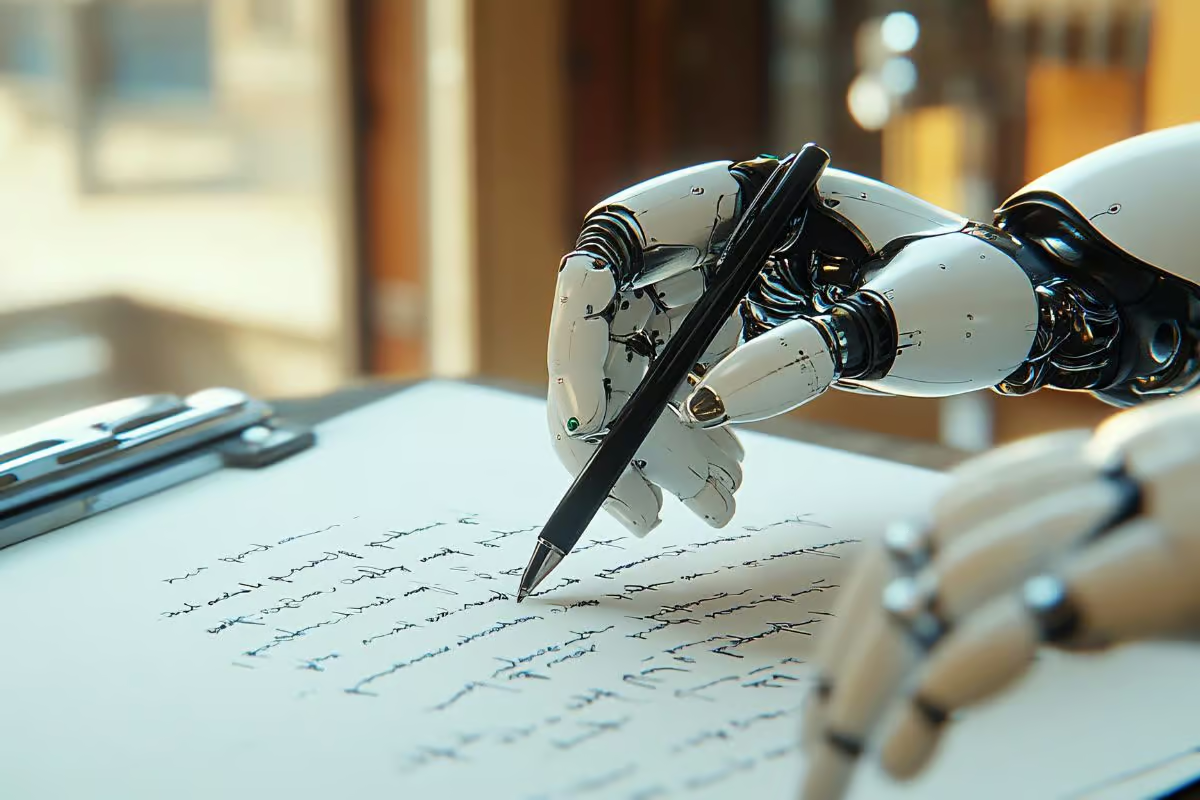
Recognize AI-Written Content
AI-written text often mimics human writing but shows subtle patterns. For example, GPT-4 generates highly coherent paragraphs, yet certain phrases or sentence structures reveal its origin. As of early 2024, research indicates over 30% of online articles in specific niches may contain AI-influenced writing. Detecting these texts starts by understanding their construction beyond mere grammar or spelling.
AI output frequently uses repetitive language, lacks genuine narrative depth, and sometimes presents overly balanced viewpoints. Suppose you read a long article with near-perfect grammar yet no distinct personal voice or errors –that’s a potential sign. Retail websites and blog posts often utilize tools like Jasper or Copy.ai, which produces these artificial nuances.
What Goes Wrong in Detection
Many rely solely on superficial clues—phrases that sound “robotic” or awkward—to label AI-generated work. This approach fails to consider AI models’ evolving fluency and can miss subtle machine-generated markers. Overemphasizing grammar checks leads to false positives since humans also write with varying precision.
Failing to detect AI accurately affects hiring, content trust, and plagiarism judgment. For instance, university admissions or journal submissions sometimes struggle to verify original authorship, as current tools can produce confusion. Missteps here may produce unfair accusations or let AI-assisted cheating slip.
The downside isn’t theoretical. In 2023, a marketing team lost roughly 20% of client trust after unknowingly deploying AI-produced copy that lacked authenticity and brand voice.
Effective Ways to Spot AI Text
Analyze Sentence Complexity
AI writing often follows repetitive syntactic patterns, avoiding very complex or intentionally fragmented sentences. Tools like Hemingway Editor help reveal unusually uniform sentence structures. Human prose tends to exhibit more erratic complexity due to natural thought flow.
Watch for Overuse of Connectors
Machine-generated sentences tend to use transition words excessively. Spot phrases like ""however,"" ""moreover,"" or ""in addition,"" clustered unnaturally. Such over-connection between points signals algorithmic output rather than natural tone.
Identify Vague Generalizations
When a text repeatedly uses non-specific terms—""many people,"" ""studies show,"" ""experts believe""—without citations, that’s suspicious. Humans usually incorporate concrete examples or data unless drafting quickly. AI content relies heavily on vagueness to remain broadly accurate.
Leverage AI-Detection Tools
Software like OpenAI’s Text Classifier (v1.1) or Turnitin’s AI sensing can score texts for likely origin. Accuracy varies, hovering around 85% in controlled tests, but integrating these scores with manual review enhances reliability. Still, don’t rely blindly on automated detection alone.
Check Metadatas and Revision History
Inspecting file properties or CMS revision logs sometimes reveals rapid or bulk content generation, a hallmark of AI usage. Editorial platforms such as WordPress log substantial editing bursts or copy-paste actions. That indicates machine involvement.
Detect Semantic Repetition
AI may restate the same idea in different words within a paragraph—a tool marks this as ""semantic overlap."" Humans tend to avoid that, jumping to new points more naturally. Tools like SEMrush or Copyscape assist in spotting internal repetition.
Notice Contextual Oddities
Even advanced models occasionally produce sentences that mismatch the surrounding text context. For example, incorrectly referencing dates or mixing unrelated industries. These errors, though rare, give AI away if examined carefully.
Examine Stylistic Consistency
AI-generated text sometimes switches tone inconsistently. A section might shift from formal to overly casual without cause. Genuine human writing usually maintains a consistent style, unless intentionally signal different voices.
Combine Multiple Methods
No single approach suffices. The best way is layering manual analysis, software checking, and metadata review. This triangulated method, used by investigative journalists and compliance officers, significantly raises detection confidence.
Real-World Examples
In late 2023, a tech news site published an article flagged by readers as ""too perfect."" The editorial team traced the text’s origin to an AI assistant tool used without adequate editing. The result: 15% drop in reader engagement and credibility.
Another case: a freelance writer submitted a content batch. Plagiarism scans showed originality, but stylistic analysis raised alerts. The client employed a mix of manual checking and Turnitin’s AI score, uncovering extensive reliance on AI drafts. They cut the contract and redesigned guidelines including mandatory manual revisions afterwards.
AI Text Detection Checklist
| Check | Manual Sign | Technical Aid | Risk Level |
|---|---|---|---|
| Sentence Pattern | Uniform length, rarely complex | Hemingway Editor | Moderate |
| Connector Usage | Excess ""however"", ""thus"" | Word frequency tools | Low to Moderate |
| Vague Language | Lots of unsourced claims | Fact-check tools | High |
| Metadata Review | N/A | CMS logs, File Properties | Moderate |
| AI Detection Software | N/A | OpenAI Classifier, Turnitin | Variable |
Frequent Pitfalls
Relying exclusively on software usually backfires. False positives unsettle writers, and false negatives allow AI content to go unchecked. Don’t ignore context or author background. For example, some professional writers purposely revise AI drafts, leaving subtle clues mixed with authentic voice.
Another mistake is overvaluing grammar perfection. Humans write errors. Yet AI output mistakes, when they appear, often involve context mismatch or factual inaccuracies unseen in handwriting. Missing that distinction leads to misplaced trust.
Lastly, one often undervalued step is cross-referencing style across large samples from the same author. Sudden stylistic jumps or differing vocabulary levels within a portfolio signal AI, or at least inconsistencies that require attention.
FAQ
How accurate are AI detection tools?
Most tools achieve 70-90% accuracy under test conditions, improving with calibrated datasets. Their reliability depends on text length, language, and model sophistication.
Can AI text be completely humanized?
Humans can edit AI drafts deeply, masking telltale signs, but total removal of machine fingerprints remains difficult, especially under detailed scrutiny.
What makes AI writing different from poor human writing?
AI displays repetitive patterns, semantic overlaps, and unnatural transitions, whereas poor human prose tends to have errors without systematic patterns.
Do plagiarisms checks detect AI-generated content?
No, plagiarism tools identify copied material, but AI text typically generates original phrases that escape these filters.
Is AI-generated content unethical to use?
Usage depends on context and transparency. Ethical concerns arise around disclosure, originality, and intent, especially in education or journalism.
Author's Insight
After reviewing hundreds of articles suspected to be AI-generated, I learned that no single signal seals the case. It requires experience to recognize subtle cues and context. Spotting AI takes patience and layering different tools. My advice for professionals is to combine digital analysis with a close read—not just to catch AI, but to assess content quality overall.
What to Remember
AI-written content hides behind polished prose but leaves identifiable traces. Machine-like sentence structure, excessive connectors, vague statements, and metadata clues help detection. Use specialized software in tandem with manual review to decide text origin reliably. Avoid jumping to conclusions based on minor errors or perfection alone. Detecting AI content demands both vigilance and balanced judgment.