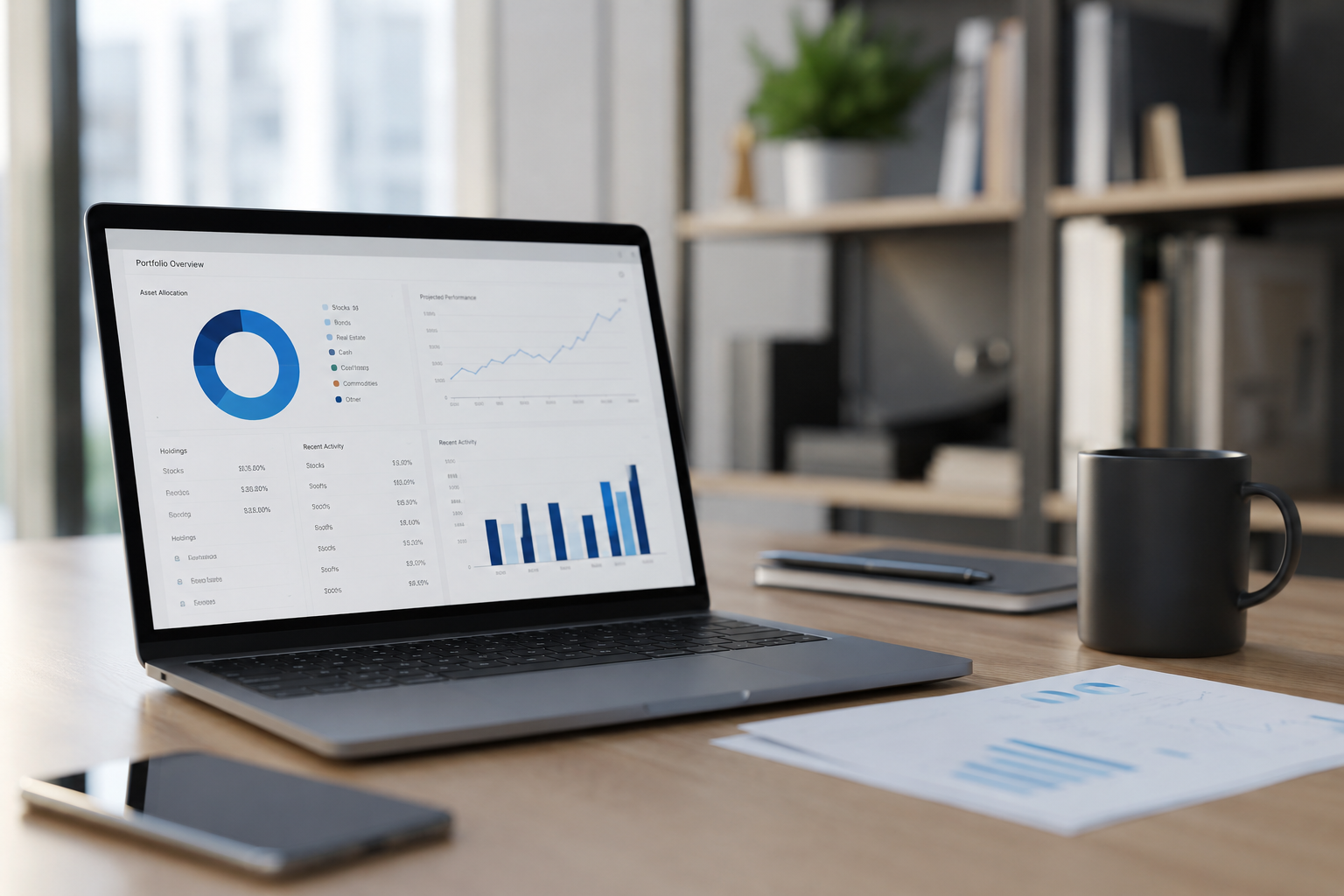
How Robo-Advisors Work
You answer a few questions. Age, income, goal timeline. Sometimes 7 clicks, sometimes 12. Then the platform assigns a portfolio that already exists before you even arrive.
Robo-advisors like Betterment, Wealthfront, and Schwab Intelligent Portfolios map responses into risk bands. A 30-year-old saving for retirement might land in a 90% equity mix. A 55-year-old nearing withdrawal often drops closer to 50% or lower.
The system does not guess. It matches patterns.
Behind that matching sits historical return data and volatility assumptions. Stocks get higher expected growth. Bonds soften drawdowns. Cash sits idle, waiting for timing gaps that rarely feel obvious to users.
Simple interface. Layered logic.
Skip human intuition. Algorithms do not hesitate.
Where Things Go Wrong
People assume the questionnaire knows them. It does not. It knows averages built from millions of accounts.
Someone with irregular income might still be placed in an aggressive allocation. A freelancer earning $6,000 one month and $1,500 the next gets treated like a stable salaried worker unless inputs say otherwise.
That mismatch creates friction.
Another issue comes from behavior during volatility. When markets drop 15%, users often panic. The system keeps rebalancing. The user stops trusting it. Then withdrawals begin at the worst possible time.
Skip emotional timing. Systems ignore fear.
Robo-advisors also compress nuance. Two people with identical income and age may still have different obligations. Student debt, family support, upcoming home purchase… none of that always gets weighted deeply.
Numbers flatten reality.
And yet billions flow through these systems. Over $1.4 trillion was managed by robo-advisors globally by 2024, according to industry estimates from Statista and Morningstar data summaries.
Scale hides detail.
How Allocation Works
Risk Profiling Layer
The first filter is risk tolerance scoring. Most platforms use 5–10 questions. Time horizon, loss reaction, liquidity needs.
A score of 1–10 often maps to equity exposure bands. A score of 8 might push 80–90% equities. Lower scores reduce volatility exposure.
Then comes calibration.
Wealthfront uses behavioral data to refine responses over time. If you sell after a 5% drop, your profile quietly shifts.
Behavior rewrites classification.
ETF Selection Logic
Robo-advisors rarely pick individual stocks. They use ETFs like VTI, VXUS, or bond aggregates such as BND.
This reduces single-company risk. A portfolio might include 3–12 ETFs depending on platform complexity.
Skip stock picking entirely. Simplicity wins scale.
Expense ratios matter. Many robo portfolios sit around 0.02%–0.15% for underlying ETFs, plus platform fees near 0.25% annually.
Small percentages compound over decades.
Tax Loss Harvesting
Some platforms sell losing positions to offset taxable gains. Betterment and Wealthfront automate this daily or weekly depending on volatility.
Losses are not failures here. They are inputs for tax efficiency. A $2,000 loss can offset $2,000 in gains, reducing tax burden depending on jurisdiction rules.
Then reinvestment follows immediately.
Skip emotional attachment to holdings. The system has none.
Rebalancing Rules
Portfolios drift as markets move. A 70/30 split can become 76/24 after a strong equity rally.
Robo-advisors correct this automatically. Rebalancing happens monthly, quarterly, or when thresholds break 5–10% depending on provider.
That keeps risk aligned with original intent.
Rebalancing feels passive. It is constant adjustment.
Cash Allocation Logic
Cash buffers appear inside portfolios for withdrawals, fees, or volatility smoothing.
Some platforms hold 1–5% in cash. Schwab Intelligent Portfolios often uses higher cash allocations depending on risk band.
That cash is not idle. It reduces forced selling during downturns.
Liquidity buys time.
Market Behavior Filters
Advanced systems adjust exposure during extreme volatility windows. Not market timing in the traditional sense, but constraint-based shifting.
If volatility spikes above historical averages by 20% or more, some algorithms slow rebalancing frequency to avoid over-trading.
Wealthfront and Vanguard Digital Advisor rely more on static allocation here. Others adjust dynamically.
Stability beats reaction.
Real Money Examples
A 32-year-old user on Betterment starts with $40,000. The system assigns 90% equities. After 18 months, the account grows to $52,000, then drops to $46,000 during a correction.
Without intervention, rebalancing keeps exposure steady. Selling bonds, buying equities. The account stays aligned instead of reacting to headlines.
Another case involves a 58-year-old using Vanguard Digital Advisor with $220,000. Allocation sits at 55% equities, 45% bonds. During a downturn, the portfolio drops 9%, but bond allocation cushions losses compared to pure equity exposure.
Drawdowns feel softer.
Then there are behavioral exits. Roughly 30% of new robo users withdraw or pause contributions within the first year according to various fintech retention studies. The system does not fail. The user steps out.
Portfolio Rules
| Factor | Method | Output | Range |
|---|---|---|---|
| Risk | Questionnaire | Equity% | 20-90% |
| Assets | ETF Map | Diversified | 3-12 ETFs |
| Tax | Loss Harvest | Offset Gains | Daily/Weekly |
| Rebalance | Threshold | Reset Mix | 5-10% |
Common Mistakes
People treat robo-advisors like autopilot. They are not. They respond to inputs, not life changes unless you update them.
First mistake: ignoring profile updates. Income changes, debt shifts, goals evolve. The system keeps old assumptions unless corrected.
Second mistake: panic withdrawals during dips. Selling during a 12% drawdown locks in losses and breaks long-term compounding paths.
Skip checking daily returns.
Third mistake: mismatched goals. Retirement portfolios used for short-term savings distort allocation outcomes. Time horizon matters more than account type.
Fourth mistake: ignoring fees. A 0.25% advisory fee looks small, but on $500,000 it becomes $1,250 annually.
Small leaks compound silently.
FAQ
Do robo-advisors beat human advisors?
Not consistently. They often match index performance minus small fees. Human advisors may add value in tax planning or complex financial situations.
Can robo-advisors lose all my money?
Unlikely if diversified. They invest in ETFs across markets, which reduces single-point failure risk. Market downturns still affect value.
How often do robo-advisors rebalance?
Most rebalance quarterly or when allocations drift beyond 5–10% thresholds depending on platform rules.
Do robo-advisors use AI?
Some use machine learning for behavior tracking and optimization. Core allocation still relies on portfolio theory and index modeling.
What is minimum investment?
Ranges widely. Betterment has no strict minimum for basic plans. Vanguard Digital Advisor often starts around $3,000.
Author's Insight
I have seen people expect robo-advisors to “think” like humans. They do not. They translate inputs into models, then repeat those models through time. When users stop interacting, portfolios become snapshots of old decisions.
The strongest results I’ve observed come from users who treat the system as a structure, not a replacement for awareness...
Summary
Robo-advisors build portfolios through risk scoring, ETF mapping, tax strategies, and automated rebalancing. Platforms like Wealthfront and Betterment rely on rule-based systems shaped by market data and behavioral inputs. Results depend less on the algorithm itself and more on how consistently users update goals and stay invested through cycles.
Set the profile honestly. Leave it alone when volatility hits. Let the structure work without interruption.